
Article: TERENZUOLA, WHERE TWO TERRITORIES MEET

TERENZUOLA, WHERE TWO TERRITORIES MEET
Between Tuscany and Liguria, between sea and mountains: a borderland where wine takes a path all its own.

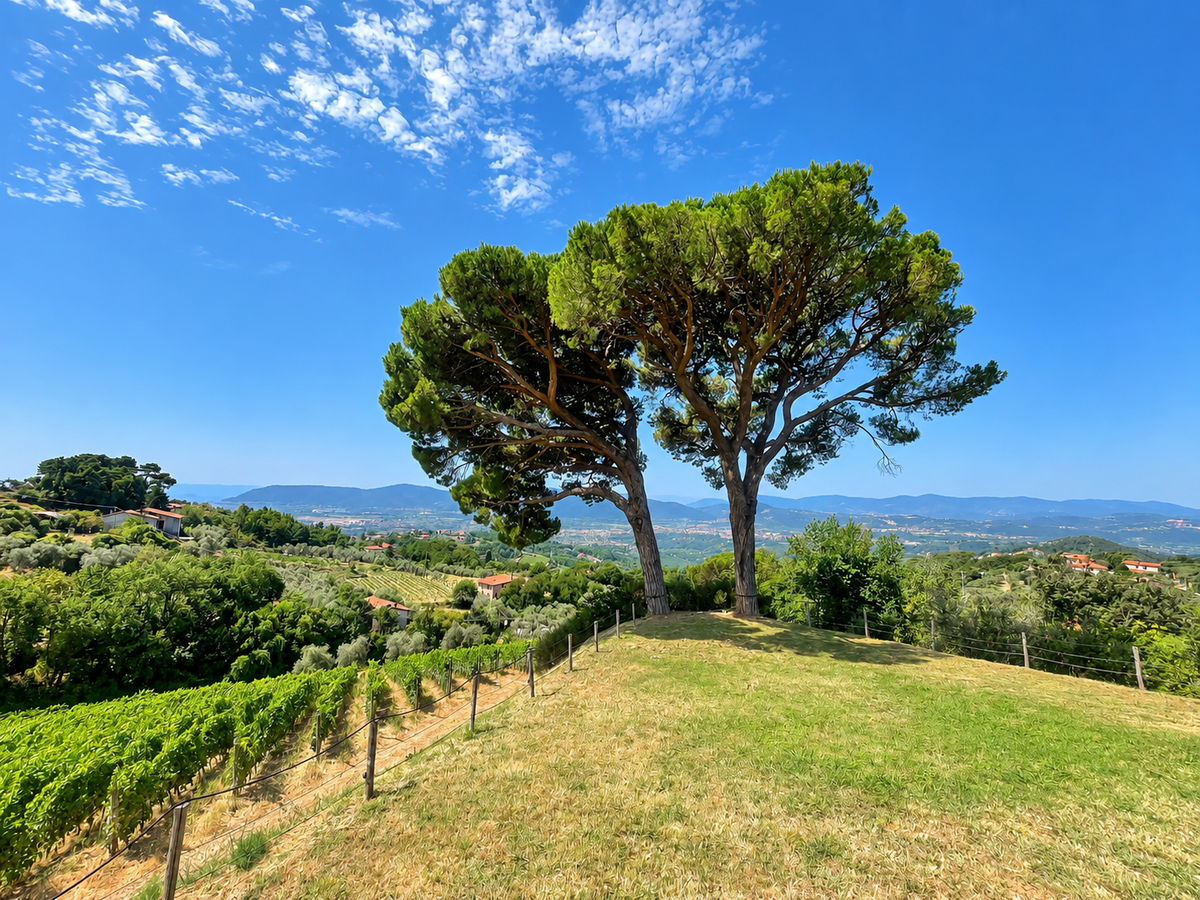
There are wineries where the visit begins when you park. At Terenzuola, however, it starts much earlier: the road to reach Fosdinovo, with its curves, small villages, stone houses, and glimpses of the sea, is already part of the experience. Here, Tuscany changes its face: it is a borderland, suspended between the sea and the mountains, between Tuscany and Liguria.
The journey to Fosdinovo is already part of the experience: you gradually climb the hills of the Lunigiana, and as you gain altitude, the landscape changes. The road becomes narrower and more winding; small villages, stone houses, farm stays, restaurants, and B&Bs nestled in the greenery appear. It is one of those routes where it feels natural to slow down, because around every bend a different view opens up, and you begin to realize that the wine you are about to taste cannot be separated from this landscape.
Welcoming us are Ivan Giuliani, owner and winemaker of Terenzuola, together with sommelier Rita Mannella, who will guide us through the visit and the tasting.
Reading the territory before even drinking it
Terenzuola was founded in 1993 and today works on about 25 hectares distributed across three territories: Colli di Luni, Cinque Terre, and Candia dei Colli Apuani. The company's choice is very clear: to work with native varieties. White Vermentino is the protagonist, but alongside it are Vermentino Nero, Pollera Nera, and Massaretta.
One of the things that struck me the most is the Vitiarium project, the collection vineyard created in the early 2000s in collaboration with the University of Pisa.

Here, historical varieties that were almost forgotten have been recovered, such as Massaretta, Pollera Nera, and Picetta Bianca and Rossa. It is not simply conservation: it is memory, research, and also a small seed bank, because the plant material can be propagated and brought back into the vineyard.
In the Colli di Luni, the vineyards change as you go up and down in altitude. In the highest part, there are about six hectares of Vermentino, the historical estate cru from which the Fosso di Corsano is born. Here, the soils are schistous and rich in skeletal material, with a very low pH. It is a characteristic that helps maintain freshness, acidity, and that mineral sensation we will later find in the glass.
The harvest is manual, and the work on the Vermentino is particularly interesting because they do not seek just one type of maturity. Multiple passes are made: a first harvest to build the acidic base, a second at maturity, and a final one towards the end of September, when the berries are more concentrated.
Vineyard management follows a sustainable logic, with cover cropping and alternating grassing to work on soil fertility, protect it from erosion, and help retain moisture. Irrigation is not used, except for very young plants.
There is also another aspect that is part of Terenzuola's vision: the philosophy of recovery. At Terenzuola, there seems to be a certain intolerance for waste, and when something can be recovered, transformed, or kept in use, they try to give it a new function. In the winery spaces, this philosophy is evident: the old barn belonging to Ivan's grandparents has been restored and transformed into the white wine cellar, while the oldest part still retains the old concrete vats and the structures of the historic winery. It is a very concrete way of understanding sustainability, without much fanfare: preserve, reuse, intervene only when necessary. Ultimately, it is the same idea that returns in the wine: less is more.
The winery, precision without doing too much
The winery is built on four levels and utilizes gravity. It is a technical choice but also a philosophical one: fewer pumps, less handling, less stress for the grapes and the wine. The whites are processed in steel, seeking precision, cleanliness, and freshness. The reds, on the other hand, start mainly in natural, unglazed, and resin-free concrete: a material that allows for slow evolution without masking the varietal character with wood aromas.
For the whites, pressing is very delicate and can be preceded by a brief maceration in the press. One of the presses also works with nitrogen, creating an inert environment that limits oxidation. Then comes one of the most interesting aspects of the Terenzuola philosophy: "less is more." The wines age on the lees, and the deposit is kept in suspension through controlled agitation. It is not an absolute non-intervention: it is, rather, a precise intervention on the details, with the aim of building richness, complexity, and especially aging potential.
In these wines, I find an important part of Ivan's vision: his Piedmontese roots, where elegance and the capacity to evolve are part of wine culture, and his passion for the great Alsatian whites. It is a sensitivity that he brings into the Lunigiana territory, and which I find especially in the Vermentino: in the Pini di Corsano, and even more so in its bottle evolution, depths and complexities emerge that we normally associate with Rieslings. And that is precisely where those notes of hydrocarbon, resin, and minerality appear that make you read Vermentino with completely different eyes.
The tasting: the Vermentino you don't expect
The common thread: elegance and evolution

Fosso di Corsano 2025 - Vermentino DOC Colli di Luni
 The first glass is the Fosso di Corsano 2025. The first thing that hits me is the salivation: it is a very mineral, savory wine, with an acidity that lingers long on the palate. The vineyard is located on schistous and rocky soils, with excellent acidity, and this allows for pushing maturity further without losing freshness. In the glass, it is straw yellow with greenish highlights, subtle and luminous. On the nose, I sense green apple, citrus, and Mediterranean scrub, then a vegetal note of fresh grass. It is an intense wine, but at the same time very elegant. This is not the "traditional" Vermentino that is all flowers and fruit: here I sense more minerality, salt, pine, and resin, with an almost balsamic depth.
The 2025 was a complicated vintage, with a very variable summer and a lot of rain in September, which forced a harvest before ideal maturity. Yet, in the glass, this difficulty translates into freshness and elegance.
The vertical: 2021, 2019 & 2017

This is where, for me, the tasting becomes truly interesting. The three wines change progressively: the color becomes more golden, and the aromatic profile transforms as well. It is one of those verticals that make you understand wine not just by tasting it, but by watching it evolve in the glass.
The 2021 is still very lively and luminous, with a bright straw yellow color that is starting to show light golden nuances. On the nose, I sense many aromatic herbs, Mediterranean scrub, hydrocarbon, and resin. On the palate, it is still super lively, with excellent freshness and nice sapidity, accompanied by an initial sweetness that speaks to the fruit's evolution. And then comes that almond-like finish, with the typical bitter note that recalls almond and the white part of citrus fruits.
The 2019 is the one that struck me immensely. Even in the glass, it is luminous, with a straw yellow color that is beginning to show its evolution. It is a very balanced wine, with beautiful verticality, deep and persistent. On the nose, I sense a softer side, with a hint of fresh honey and chamomile, along with a mineral and herbaceous component that gives it tension. In the mouth, it is ample but never loses momentum: the softness is perfectly supported by freshness and minerality. It is precisely this balance between freshness, sapidity, and verticality that won me over. It is one of those glasses I could keep drinking without getting tired.
The 2017 is different. It was a very hot vintage and the grapes were dehydrated, so we find more concentration. In the glass, the color is golden yellow and the wine is full-bodied. I sense a lot of hydrocarbon, resin, and dried flowers, then peach and pulpier fruit. It is sweeter, more powerful, and also more demanding, but precisely for this reason, I find it very interesting for understanding the evolution of Vermentino.
The part I find most fascinating is seeing how Vermentino changes over time; with evolution, they can yield notes of hydrocarbon, flint, and resin. And in the mouth, that typical bitter note also arrives, almost like almond and the white part of the citrus. These are scents that, especially in the vertical, make me read Vermentino in a completely different way.
I Pini di Corsano 2024 - Vermentino DOC Colli di Luni Superiore
 I Pini di Corsano comes from the same vineyard as the Fosso, but from a selection of the historical parcel under the two pine trees that are the winery's symbols, identified among about twenty parcels for its higher acidity. It is a very small production of about 1,300 bottles.
In the glass, it presents as an intense, lively, and luminous straw yellow. On the nose, I immediately find a beautiful component of fresh grass and aromatic herbs, accompanied by citrus, a mineral sensation, and that saline note that also returns on the palate. It is a very precise and vertical profile, with a depth that already hints at its capacity to evolve.
The Vermentino is harvested last, at the end of September, and vinified with 48 hours of maceration in the press, 6-8 months on the lees, and one year in the bottle. In the mouth, I feel it is fatter and softer at the entry compared to the Fosso, but immediately supported by an excellent acidic backbone and beautiful sapidity. It is full but not heavy, with a very long progression and a fresh, mineral finish. It is here that I truly understand how much Vermentino can evolve: it is not just a wine to be drunk young, but a white capable of acquiring complexity and depth over the years.
Permano 2023 - Vermentino and Trebbiano IGT Costa Toscana
 Then we completely change landscape and arrive in Candia dei Colli Apuani, below the marble quarries of Carrara. Here viticulture is heroic: about 400 meters elevation, terracing, and manual labor. The wine is born from old mixed vineyards, with numerous native varieties planted and harvested together. Maceration takes place with submerged cap for about a couple of weeks: more of an infusion than an aggressive extraction.
For me, it was a beautiful aromatic discovery. I rediscovered a scent that I rarely encounter in wines and that took me straight back to my childhood in Mexico: guava. It was so sharp, so clear, that it felt almost like eating guava. An explosive perfume, capable of opening up a flood of beautiful memories.
La Nerine 2023 - Vermentino Nero IGT Toscano
 Vermentino Nero was another pleasant surprise of the tasting. It is a native variety from the province of Massa-Carrara, still the subject of study regarding its genetic origin. Terenzuola believed in this grape variety twenty years ago, when the dominant taste was looking for much more powerful and tannic reds.
The name La Nerine evokes a delicate flower, amaranth pink in color, which blooms after storms. A particular blossoming, almost a symbol of rebirth, which finds its reference in the name and color of the wine.
In the glass, it is a pale, lively amaranth red. On the nose, it is vegetal and fragrant, with hints of strawberry, currant, and cherry. On the palate, I am immediately struck by the freshness: it is a 12.5% vol wine, agile and pleasant, with a structure supported primarily by acidity rather than tannin. It almost gives me the impression of a white. It is a red that I would even drink slightly chilled and which I find very versatile. A true all-rounder.
La Merla 2023 - Canaiolo IGT Toscano
 The historical red of Terenzuola, made from Canaiolo Nero, a local biotype of the Lunigiana, with Massaretta to complete the structure. The name recalls the "uva merla" (blackbird grape), as it is called locally, and also the "days of the blackbird" (the coldest days of the year), when the wine is traditionally released.
In the vintage tasted, the 2023, the color is an intense and lively ruby red. On the nose, the fruit is darker compared to the Vermentino Nero, with notes of dark cherry and marasca cherry, accompanied by wood that is present but perfectly integrated. On the palate, it surprises me with its elegance: it is soft and persistent, and melts in the mouth more than the nose leads you to imagine.
Forma Alta 2022 - Costa Toscana
 Forma Alta 2022 is a vertical wine, made from Vermentino Nero and Massaretta. In the glass, it is an intense and lively ruby red. On the nose, I sense cherry, peony, and a delicate earthy note. On the palate, it seems to me a deeper and more structured reading of the territory: it is fresh with a beautiful structure well supported by acidity. It maintains that tension and freshness that return as a common thread in Terenzuola's wines.
A visit that left me with the feeling of having encountered an authentic territory, capable of expressing itself through elegant, deep, and constantly evolving wines.
At Terenzuola, I understood that time, when respected, can become one of the most beautiful ingredients of wine.
Read more
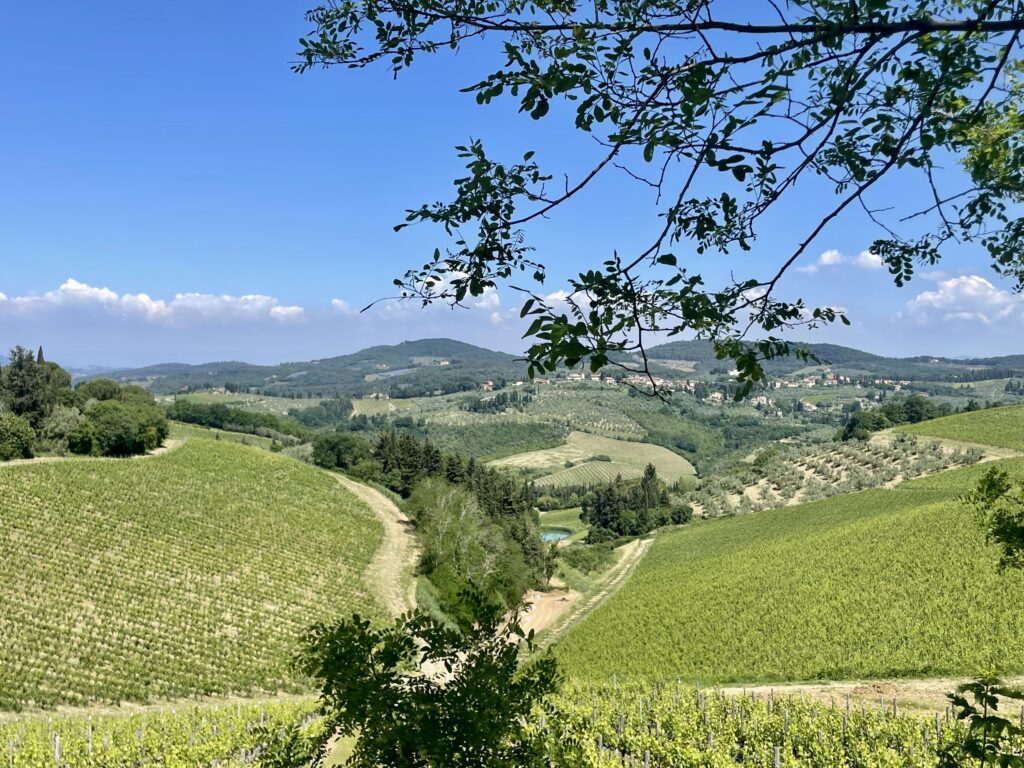
Beyond Super Tuscans: elegance and terroir in the vision of Ilaria Tachis
After the Super Tuscans, a new idea of Tuscan wine: more tied to the territory, to elegance, and to drinkability. At Podere La Villa, Ilaria Tachis shares her journey, the legacy of Giacomo Tachis,...
Read more